Swallowing Rehabilitation.
Swallowing difficulty (dysphagia) after stroke, brain injury or neurological illness can make every meal a safety risk.
Swallowing difficulty (dysphagia) after stroke, brain injury or neurological illness can make every meal a safety risk. Swallowing rehabilitation retrains safe eating and drinking through targeted exercises, postural strategies and carefully graded food and fluid textures.
Functional problems it may address
- Coughing or choking during meals
- Food sticking, drooling or difficulty managing saliva
- Recurrent chest infections that may relate to aspiration
- Feeding difficulties in children with neurological conditions
What assessment may include
A structured clinical swallowing assessment examines oral control, swallow trigger and airway protection, and identifies which textures and strategies are currently safe — coordinated with the treating doctor, including where instrumental tests are advised.
What sessions involve
Sessions combine swallowing exercises, posture and pacing strategies, and supervised practice with appropriate textures, progressing as safety improves. Families learn mealtime safety routines.
How it connects with other therapies
Runs jointly with speech therapy and nursing/caregiver routines; nutrition decisions stay coordinated with the treating medical team.
Common questions
Is swallowing therapy safe?
Can tube-fed patients work toward eating again?
What can family do at mealtimes?
Swallowing rehabilitation in Gurugram — as it actually happens
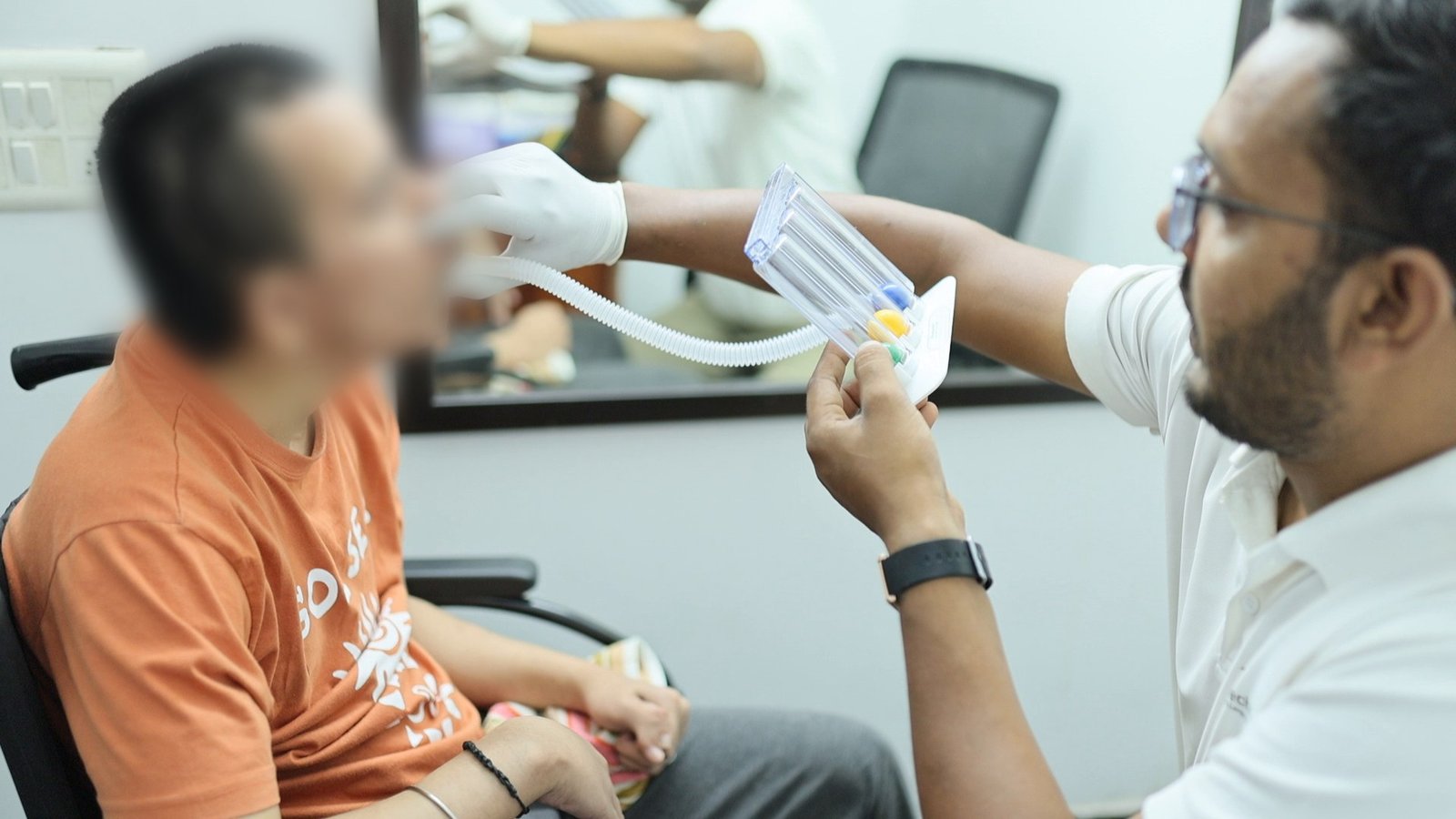
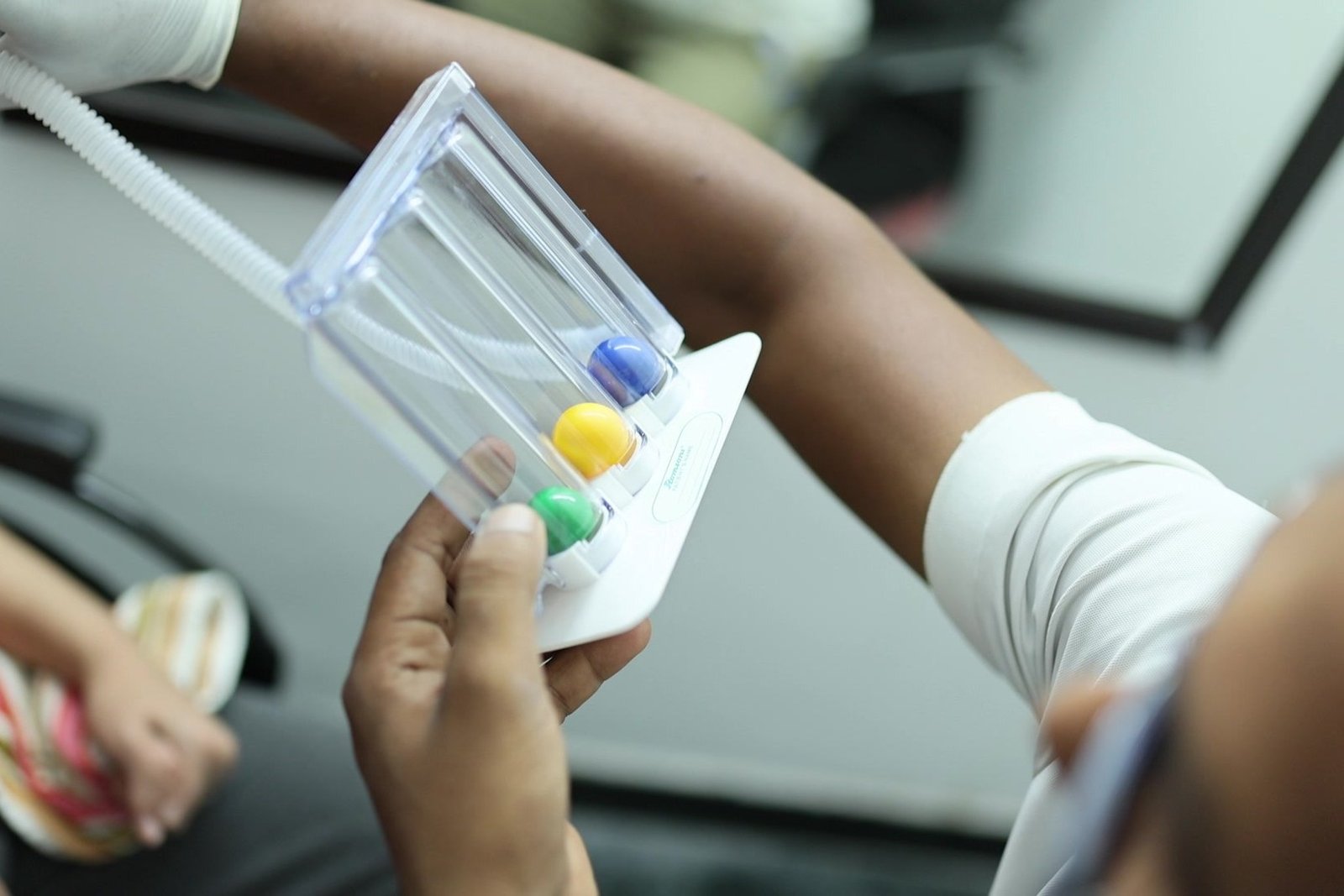
Photographed at our centre in Sector 39, Gurugram: incentive spirometry — the breath-control work that supports safe swallowing — held to the mouth by the therapist, and the device itself with its three coloured balls. Swallowing is assessed from the first day and the diet is adjusted while the work is done; suitability, duration and outcomes vary for every patient.
Let us understand the present condition and help you identify the next appropriate step.
Share recent reports and a short description of the current condition. Our rehabilitation team will call you to discuss assessment and the options that may be suitable.
The information on this website is for general educational purposes and does not replace an individual clinical assessment. Rehabilitation suitability, programme duration and outcomes vary according to the patient’s condition, medical stability, goals and response to therapy.