Speech & Language Therapy.
Speech and language therapy restores the ability to communicate and to swallow safely — capacities that shape dignity, relationships and safety more than almost any other.
Speech and language therapy restores the ability to communicate and to swallow safely — capacities that shape dignity, relationships and safety more than almost any other. It spans speech clarity, language, voice, communication alternatives and swallowing.
Functional problems it may address
- Aphasia — difficulty finding words or understanding language after stroke
- Slurred or unclear speech (dysarthria)
- Weak voice, including in Parkinson’s
- Children’s speech and language delays; swallowing difficulties at any age
What assessment may include
Assessment identifies which channels are affected — speech, language, voice, fluency, or swallowing — and how communication currently works between the patient and the people around them.
What sessions involve
Sessions use structured exercises, conversation practice and, where helpful, communication aids; family members are coached as communication partners. Swallowing work is coordinated with medical guidance.
How it connects with other therapies
Integrates with cognitive rehabilitation, pediatric programmes and swallowing rehabilitation; communication goals thread through the entire care plan.
Common questions
Can adults regain speech after stroke?
Do you provide alternative communication options?
How do you help soft voice in Parkinson’s?
Speech therapy in Gurugram — as it actually happens
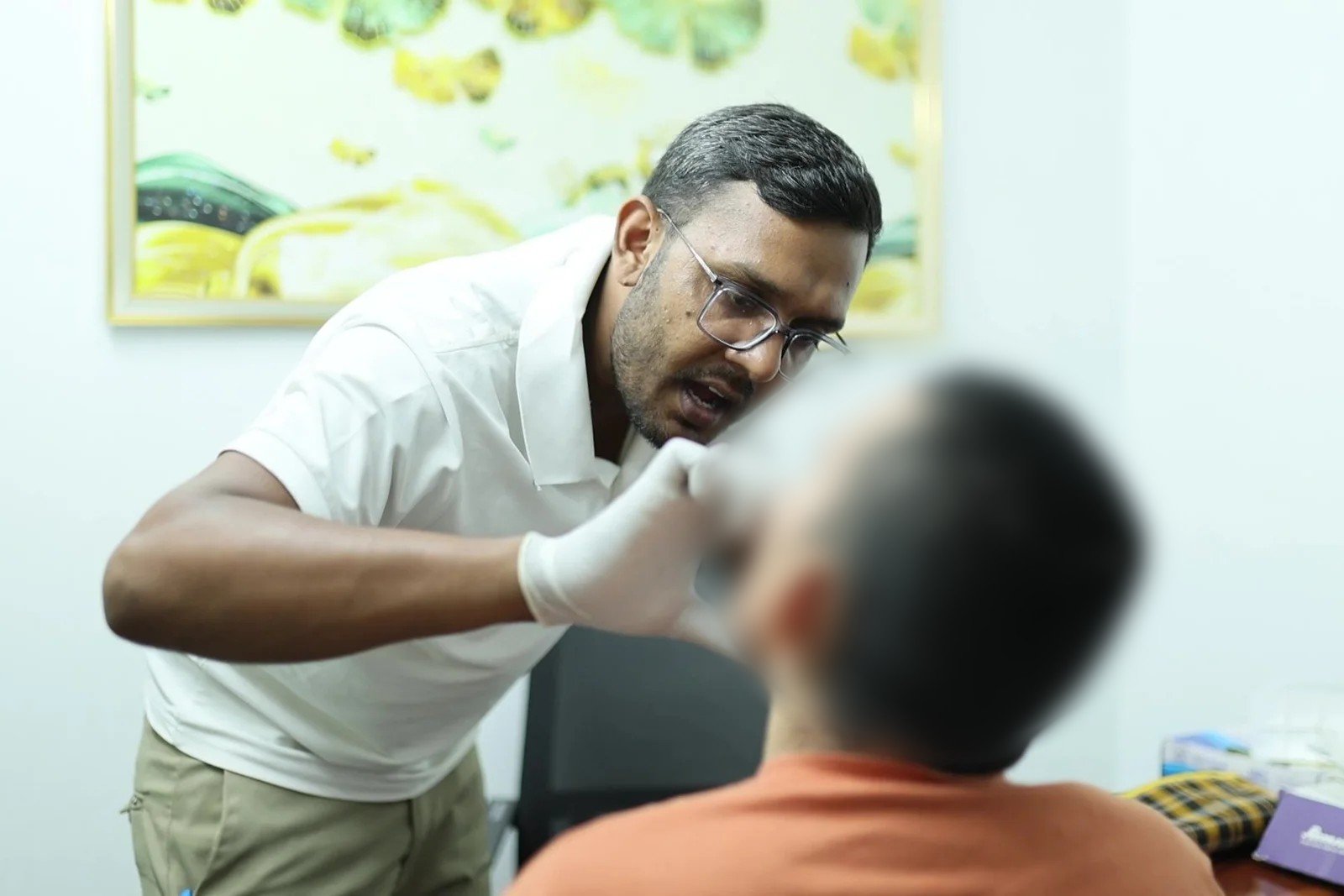
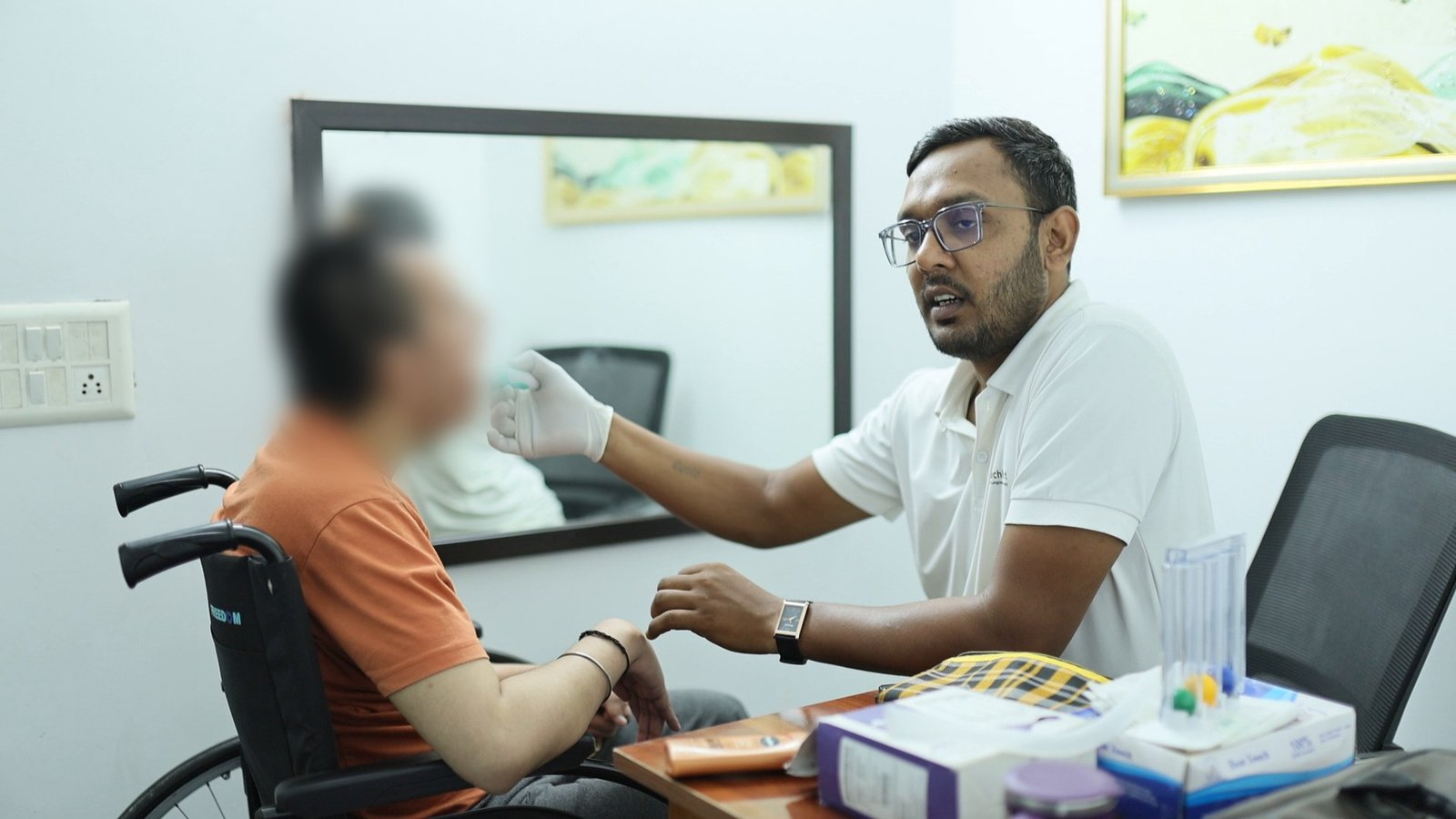
Both photographs were taken at our own centre in Sector 39, Gurugram: gloved oral-motor work with the therapist guiding the movement, and the therapist demonstrating a mouth shape for the patient to copy. Sessions are planned after assessment and reviewed on a set date; suitability, duration and outcomes vary for every patient.
Let us understand the present condition and help you identify the next appropriate step.
Share recent reports and a short description of the current condition. Our rehabilitation team will call you to discuss assessment and the options that may be suitable.
The information on this website is for general educational purposes and does not replace an individual clinical assessment. Rehabilitation suitability, programme duration and outcomes vary according to the patient’s condition, medical stability, goals and response to therapy.